
Yoga offers a simple way to relax after a long day. It helps release physical tension and quiets your thoughts while preparing your body for quality sleep. Adding a brief yoga practice to your nighttime routine can lower stress levels and support better rest. These five gentle poses will help you transition into a calm state before bed.
Child’s Pose
This resting position gently stretches your lower back and hips while encouraging deep breathing. Kneel on your mat and sit back on your heels. Then fold forward and extend your arms in front of you or rest them alongside your body. Stay in this pose for several minutes while focusing on slow breaths. The position naturally calms your nervous system and releases tension from your spine.
Legs Up the Wall
This restorative pose improves circulation & reduces swelling in your legs & feet. Sit sideways next to a wall and swing your legs up as you lie back on the floor. Your body should form an L-shape with your legs resting against the wall. Place your arms at your sides with palms facing up. This position reverses the effects of sitting or standing all day and promotes relaxation throughout your entire body.
Supine Twist
Gentle twists help release tension from your spine & massage your internal organs. Lie on your back and draw your knees toward your chest. Let both knees fall to one side while keeping your shoulders flat on the ground. Extend your arms out to the sides and turn your head in the opposite direction of your knees. Hold for a few breaths before switching sides. This movement helps your body let go of accumulated stress.
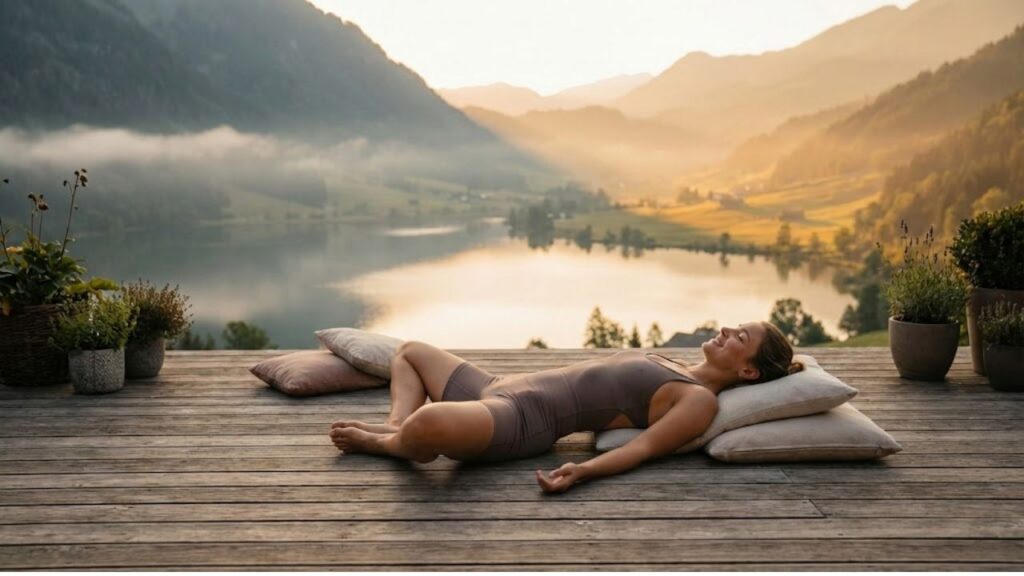
Reclining Butterfly
This hip opener releases tightness in your groin and inner thighs while promoting relaxation. Lie on your back and bring the soles of your feet together. Let your knees fall open to the sides. Place your hands on your belly or extend them overhead. The pose gently opens your hips and encourages deeper breathing patterns that signal your body to relax.
Corpse Pose
This final relaxation pose allows your body to absorb the benefits of your practice. Lie flat on your back with your legs extended & arms resting at your sides. Close your eyes and focus on releasing tension from every part of your body. Start from your toes and work your way up to your head. Remain in this position for at least five minutes while breathing naturally. This complete stillness prepares your mind and body for sleep. Practice these poses in dim lighting and consider playing soft music to enhance the calming atmosphere. Listen to your body and never push into pain. With regular practice you will notice improvements in both your sleep quality & overall sense of wellbeing.
1. Child’s Pose (Balasana)
Child’s Pose is a gentle resting position that stretches your back and hips and thighs. It calms your nervous system and helps you breathe deeply. This pose works well for lowering stress levels and helping your body relax.
How to Do It:
- Start by kneeling on the mat with your big toes touching and knees spread apart.
- Lower your torso towards the floor, bringing your forehead to rest on the mat.
- Extend your arms in front of you or alongside your body, palms facing up.
- Focus on deep, slow breathing as you relax in the pose for 2-3 minutes.
2. Forward Fold (Uttanasana)
Forward Fold is a simple yet effective pose for releasing tension in the hamstrings, lower back, and neck. It promotes relaxation by encouraging a gentle inversion, which helps calm the mind and stimulate the parasympathetic nervous system.
How to Do It:
- Stand with your feet hip-width apart and slowly fold forward at the hips, bringing your head toward your knees.
- Keep your knees slightly bent if needed and let your arms dangle towards the ground or hold opposite elbows.
- Stay in the pose for 1-2 minutes, focusing on your breath and allowing your body to soften into the fold.
3. Legs Up the Wall (Viparita Karani)
Legs Up the Wall works well for relaxation and better blood flow. This pose releases tension in your legs and eases lower back pain. It also calms your nervous system which makes it a good choice for evening practice.
How to Do It:
- Sit close to a wall and lie back, extending your legs up the wall with your feet resting against it.
- Your arms can rest alongside your body, palms facing up.
- Close your eyes and focus on your breath, staying in the pose for 5-10 minutes to fully relax.
4. Seated Forward Fold (Paschimottanasana)
This forward fold targets the hamstrings, lower back, and spine, helping to release accumulated tension. It also promotes deep breathing and mental calmness, which are essential for winding down at night.
How to Do It:
- Sit on the floor with your legs extended straight in front of you.
- Inhale to lengthen your spine, then slowly exhale as you fold forward, reaching your hands towards your feet.
- Keep your back straight, and don’t worry about touching your toes; simply stretch to where your body feels comfortable.
- Hold the pose for 1-3 minutes, focusing on releasing any tension with each breath.
5. Reclining Bound Angle Pose (Supta Baddha Konasana)
Reclining Bound Angle Pose is a restorative position that releases tension in the hips & lower back. This pose promotes relaxation by calming the mind and opening the chest. It gently stretches the groin area while allowing the body to rest completely. The position creates space in the hip joints and encourages deep breathing. Many people find this pose helpful for reducing stress & anxiety. It can be practiced with props like blankets or bolsters for added comfort. The gentle opening of the chest improves circulation & helps with better oxygen flow. This makes it an excellent choice for cooling down after exercise or preparing for sleep. Regular practice of this pose can improve flexibility in the hip area over time. It also supports the nervous system by activating the body’s natural relaxation response.
How to Do It:
- Lie on your back with your knees bent and the soles of your feet together.
- Allow your knees to fall open to the sides, letting gravity gently stretch your hips.
- Place your hands on your belly or at your sides, palms facing up.
- Stay in this position for 3-5 minutes, focusing on deep, slow breaths to encourage relaxation.
Conclusion
Incorporating these calming yoga poses into your evening routine can help you unwind, release physical and mental tension, and prepare for a restful night’s sleep. Whether you practice them all or choose a few, yoga offers a simple yet effective way to enhance your well-being and improve your sleep quality.
FAQs
1. How long should I hold each yoga pose?
It’s recommended to hold each pose for about 1-5 minutes, depending on the pose and your level of comfort. Focus on relaxing into the stretch and breathing deeply throughout each pose.
2. Can I practice these poses if I’m a beginner?
Yes! These poses are gentle and suitable for beginners. If you’re new to yoga, feel free to modify the poses to suit your body’s needs and use props, such as cushions or blankets, for extra support.
3. Can I do these poses every night?
Absolutely! These calming poses are ideal for a nightly routine. Practicing them regularly will help you unwind, reduce stress, and improve the quality of your sleep.
4. Should I practice yoga before or after dinner?
It’s best to practice yoga at least 1-2 hours after eating, as this allows your body to digest the meal before moving into deep stretches. If you’re doing yoga right before bed, make sure your stomach is comfortable.
5. Are there any precautions I should take while doing these poses?
Always listen to your body and avoid pushing yourself too hard. If you have any pre-existing medical conditions or injuries, consult with a healthcare professional before starting a new yoga practice.
